Understanding Cap Rates in Retail Real Estate
The most quoted number in commercial real estate — what it measures, and what it leaves out.
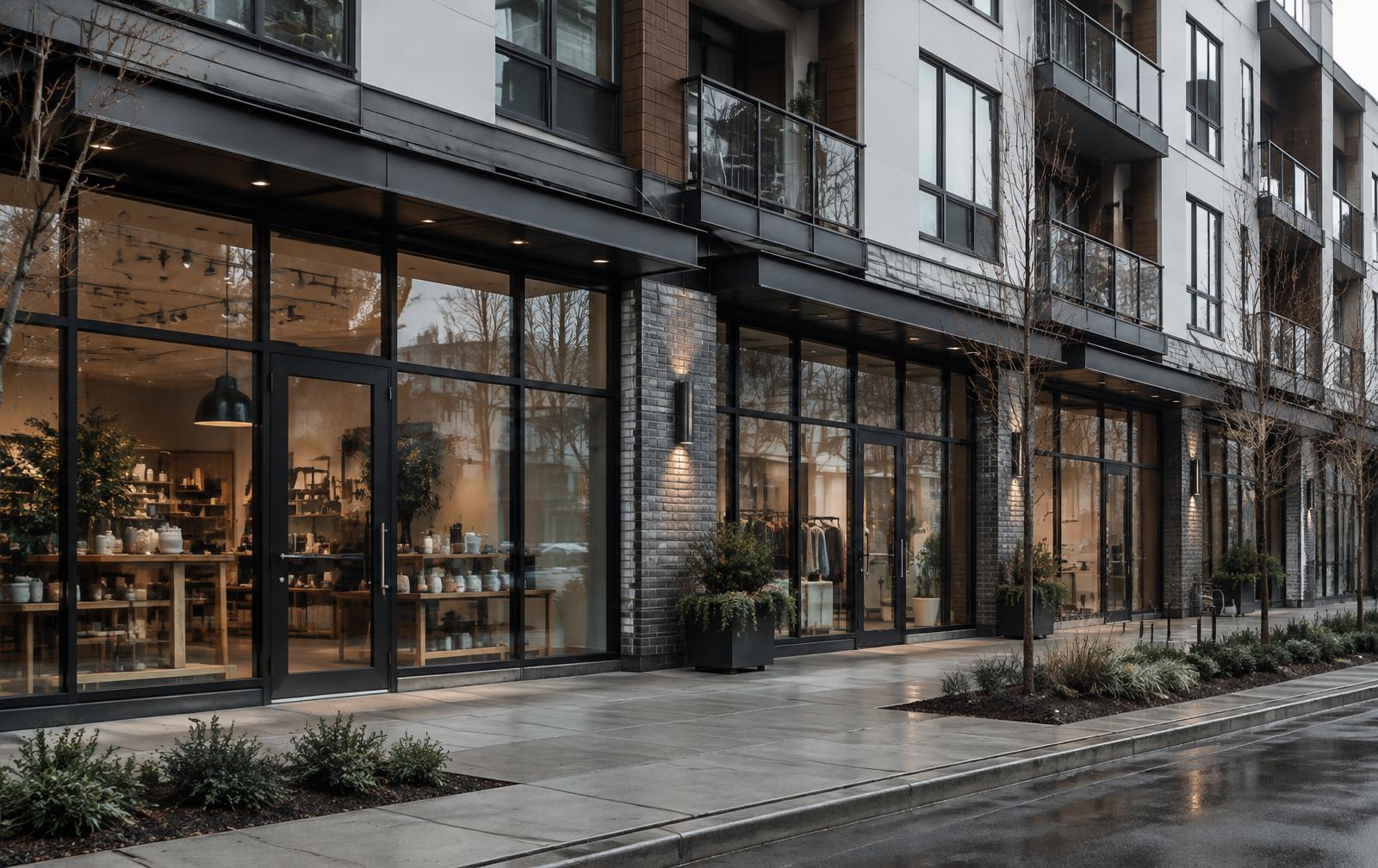
The capitalization rate is the ratio of a property's net operating income to its price. It is simple to calculate and easy to misuse.
The formula
Cap Rate = NOI ÷ Price. Rearranged, Value = NOI ÷ Cap Rate. If a hypothetical property produces $100,000 of NOI and trades at a 6.5% cap rate, the implied value is roughly $1,538,000.
Because the cap rate sits in the denominator, small changes move value meaningfully. In the same example, a 7.0% cap rate implies about $1,429,000 — a difference of more than $100,000 from half a percentage point.
“A cap rate is a snapshot of one year's income — not a forecast.”
What a cap rate does not tell you
A cap rate is a snapshot of one year's income. It does not account for rent growth, upcoming vacancies, capital expenditures, or financing. Two properties at the same cap rate can have very different futures.
It also depends on whose NOI you are using. A seller's pro forma, a trailing twelve months, and a buyer's underwritten figure can all differ.
Examples are hypothetical and for education only. This article is not investment, legal, tax, or financial advice.
The Retail Blueprint Brief
Get the next one in your inbox.
The Brief is in preparation. Signups are not yet active; this form does not store your details.
Related reading
Investment
What Actually Drives a Retail Property's Value?
Income, risk, and the market's appetite for both — a framework for thinking about value beyond the asking price.
8 min read
Tenants
Why Tenant Credit Matters More Than Most Beginners Realize
A lease is only as strong as the party obligated to pay it.
6 min read

Leasing
NNN vs. Gross Leases: What Actually Changes?
Who pays the operating expenses changes the economics for both sides of the table.
6 min read